

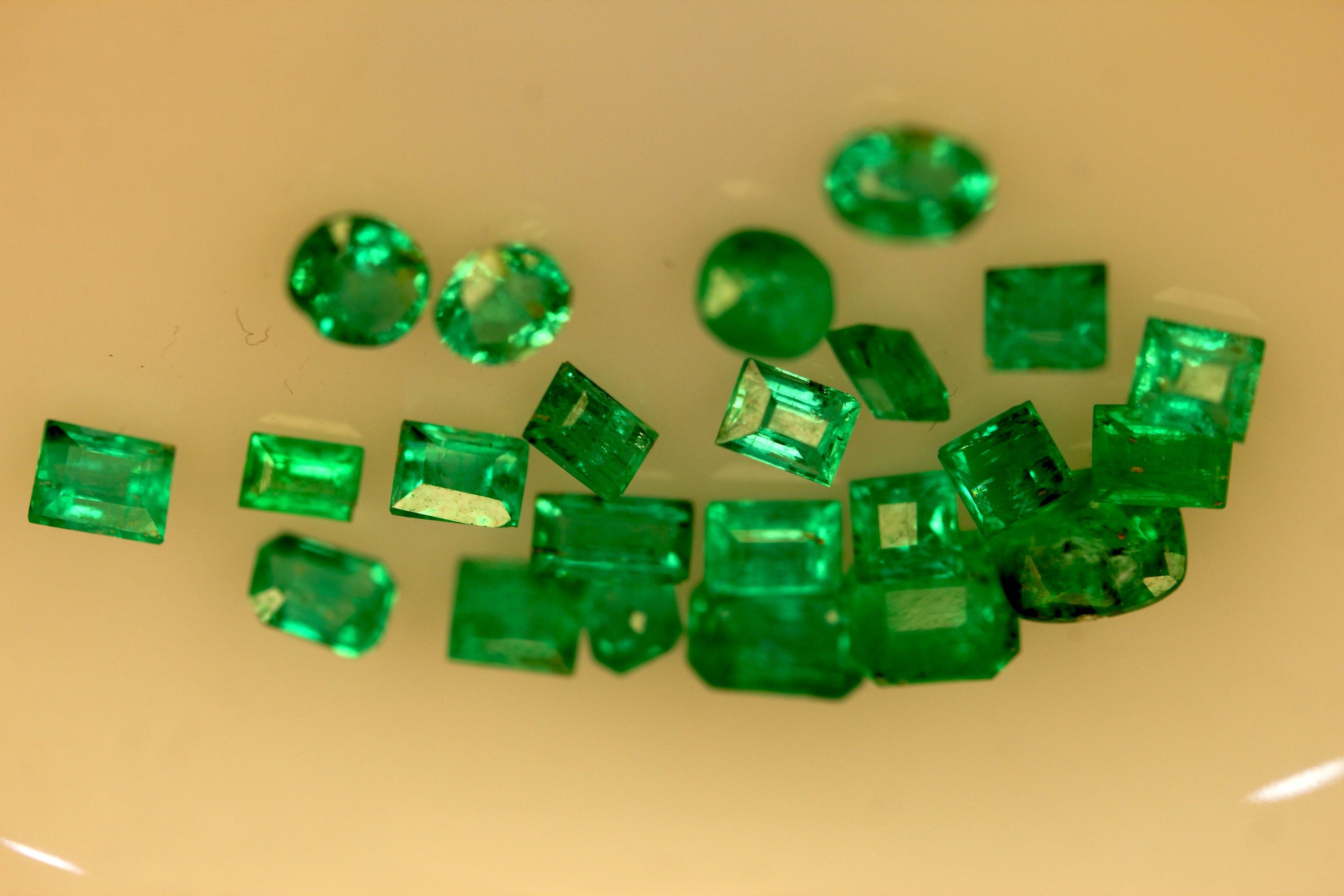
When purchasing a loose natural emerald, most buyers are taught to consider color, clarity, cut and carat weight. These four factors are important, but they do not completely answer one practical question:
Quick summary: Color, clarity, cut and carat weight are the classic "Four Cs," but they don't fully predict how a stone will look once mounted. This guide covers the fifth, practical factor — compatibility — so you can choose a loose emerald that performs well in the finished piece, not just in a photograph.
What will this emerald look like after it is set in jewelry?
Two emeralds can have the same weight, similar color and the same stated origin yet perform very differently. One may appear bright and generously sized in a ring. The other may look small, dark or transparent through the center. One may contain an attractive internal garden, while another may have a surface-reaching fissure positioned exactly where a jeweler needs to place a prong.
The missing factor can be called compatibility: how well the loose emerald's proportions, optical performance and internal structure suit its intended jewelry design.
Carat Weight Does Not Tell You How Large an Emerald Will Look
Carat measures weight, not visible size.
A one-carat emerald may be cut with a broad face and moderate depth, while another one-carat emerald may carry more of its weight underneath the girdle. Viewed from above, the deeper stone may look noticeably smaller even though both weigh the same.
This is why the millimeter measurements of a loose emerald matter. Buyers should compare:
- Length
- Width
- Total depth
- Face-up outline
- Carat weight
A deeper cut is not automatically a defect. Emerald cutters must work around fractures, color zoning and the original shape of the rough. They may also use depth to strengthen or modify the stone's visible color. GIA explains that a cutter can deepen a pale emerald to intensify its appearance or use a shallower design to lighten a stone that would otherwise appear too dark.
The important question is whether the retained depth improves the finished emerald enough to justify the hidden weight.
When comparing two stones of similar weight and quality, look at their millimeter dimensions rather than assuming they will have the same visual presence.
Look for Life, Not Just Green Color
Color is generally the most important quality factor in an emerald, but color should not be judged from one brightly illuminated photograph. Fine emerald color depends on a combination of hue, tone and saturation, and subtle variations can cause significant differences in appearance and value.
An emerald can appear intensely green under concentrated display lights while becoming nearly black in ordinary indoor conditions. Another may look attractive in daylight but pale under warm lighting.
Before buying a loose emerald online, request video showing the stone:
- Face-up under diffused daylight
- Under normal indoor lighting
- Moving slowly from side to side
- Against a neutral background
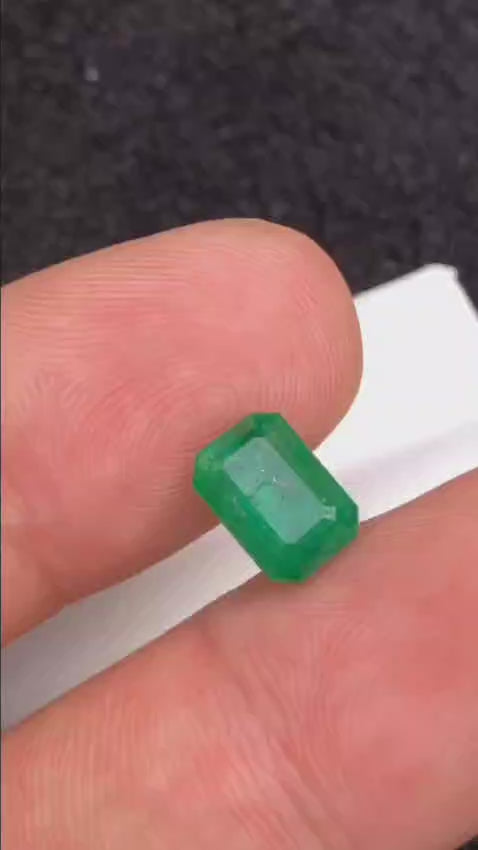
- Resting on or near skin
The purpose is not to find an emerald that looks identical in every environment. Natural gemstones change with lighting. The goal is to determine whether its color remains attractive in the conditions in which it will actually be worn.
A vivid stone that retains visible internal detail is generally more visually useful than one that appears impressively dark in a still image but loses most of its life once the lighting changes.
Check the Center for Windowing
A window is a transparent or washed-out area through which light passes instead of returning to the viewer. It often appears near the center of a faceted gemstone.
GIA describes windowing as an area where light passes through the gemstone rather than being reflected back by the pavilion facets, creating dull or gray-looking central areas.
A simple test is to hold the loose emerald above printed text or a distinct background. When viewed straight through the table, ask whether the background is clearly visible through a large portion of the stone.
A small amount of transparency may not ruin an emerald, particularly where color, rarity or origin is the primary attraction. The concern is a broad central window that makes the stone appear empty or lifeless.
Windowing can become more noticeable after an emerald is mounted over skin or in an open-backed setting. Buyers should therefore examine it before committing to a jewelry design.
Also tilt the emerald slightly. Many gemstones show some temporary windowing when viewed from an angle. The more significant concern is a large window that remains obvious when the stone is viewed face-up.
Check for Excessive Dark Extinction
The opposite of windowing is not always brilliance. A stone may instead show extensive dark or black areas called extinction.
Some contrast is normal and can create depth. Excessive extinction, however, can make a large portion of an emerald appear inactive. Research on colored-stone appearance notes that windowing, brilliance and extinction are strongly influenced by the gemstone's cut and pavilion geometry.
Rotate the emerald slowly under soft lighting. Observe whether the dark areas move and are replaced by visible green flashes, or whether the same large section remains black from most viewing positions.
A well-performing emerald does not need diamond-like sparkle. Emeralds are valued primarily for color, transparency and their characteristic glow. Nevertheless, the stone should still offer enough reflected light to reveal its green body color.
This distinction is particularly important when buying darker Zambian, Swat or Afghan emeralds. Deep color can be attractive, but darkness should not be mistaken automatically for higher saturation or better quality.
Judge Inclusions by Position, Not Only by Quantity
Natural emeralds commonly contain visible inclusions. GIA notes that eye-clean natural emeralds are especially rare, and buyers in the colored-stone trade generally accept inclusions in emeralds more readily than they would in diamonds.
“The trade generally accepts eye-visible inclusions in higher-quality emeralds.”
The familiar term jardin, meaning garden, describes the moss-like or plant-like internal appearance seen in many natural emeralds.
However, not all inclusions have the same effect.
An internal crystal or healed fissure may provide character without seriously affecting durability. A large reflective fissure beneath the table may interrupt transparency. A surface-reaching fracture near a corner or girdle may create a more practical concern because that area can experience pressure during setting.
When inspecting a loose emerald, separate three questions:
Does the inclusion affect beauty?
Does it interrupt transparency, dominate the face-up view or distract from the color?
Does it reach the surface?
Surface-reaching fractures are important because oils, resins or other fillers may enter them and because their condition may affect durability.
Where is it positioned?
A fissure running into a vulnerable corner or directly beneath a future prong deserves more attention than an isolated internal feature away from the stone's edge.
GIA explains that emerald cutters must design around significant fractures and that emeralds are more vulnerable than corundum during cutting, setting and careless wear.
An online photograph cannot always answer these questions. For a valuable stone intended for a frequently worn ring, examination by a qualified gemologist and an experienced bench jeweler can be more useful than simply asking whether the emerald is "eye clean."
Match the Emerald to the Type of Jewelry
The best emerald for a pendant is not necessarily the best emerald for a ring.
A pendant usually experiences fewer impacts than a ring, so a large emerald with attractive color but a more delicate inclusion pattern may still be appropriate. Earrings can also allow buyers to prioritize matching color, outline and face-up size.
Rings demand more careful consideration because hands regularly encounter doors, desks, tools, bags and other hard surfaces.
Emerald ranks approximately 7.5 to 8 on the Mohs hardness scale, but hardness measures resistance to scratching rather than resistance to breaking. GIA describes emerald as having fair to good toughness and requiring more care than ruby or sapphire because of its common fractures and clarity enhancement.
This does not mean natural emeralds cannot be worn in rings. Emerald jewelry has survived for centuries. It means that the stone and mounting should be selected together.
For a frequently worn ring, prioritize:
- A structurally sound girdle
- Protected corners
- No major surface-reaching fissure beneath a prong
- A setting that shields exposed edges
- A design that does not position the emerald unnecessarily high above the finger
The classic rectangular emerald cut was partly developed to protect vulnerable corners. Its clipped corners provide safer locations for prongs than sharp rectangular points would.
Protective bezels, partial bezels and carefully designed halos may provide additional edge protection, although the correct setting depends on the individual stone.
Examine the Girdle Before Choosing a Setting
The girdle is the outer edge separating the crown from the pavilion. It is also the area held by prongs or enclosed by a bezel.
A very thin section of girdle may be vulnerable during setting. A heavily uneven girdle can make secure mounting more difficult. Surface cavities, chips or open fissures around the edge should be identified before the jewelry is designed.
This is one reason buyers should select the emerald before finalizing the setting.
A jeweler working from only an estimated carat weight or generic shape may create a mounting that does not accommodate the actual stone's corner angles, depth, girdle thickness or inclusion placement.
For custom jewelry, provide the jeweler with the emerald's exact measurements and allow the jeweler to inspect the stone whenever possible.
Understand What Oiling Does—and Does Not Do
Most fashioned natural emeralds contain surface-reaching fractures, and many are clarity enhanced with oil, wax, resin or another filling substance. These materials reduce the visibility of fractures but do not remove them.
Treatment should therefore be considered alongside structural placement.
A beautifully colored emerald with minor oiling and well-positioned fissures may be suitable for fine jewelry. A stone with extensive filled fractures running into several edges may require a more protective design, even if it appears clear in photographs.
Ask the seller to disclose:
- Whether clarity enhancement was detected
- The stated extent of enhancement
- Whether the filler type is known
- Whether the report is current
- Whether the stone has been cleaned, recut or re-oiled since testing
Treatment extent is not the same as clarity grade. A report stating minor enhancement does not necessarily mean the emerald has only minor natural inclusions.
🌿 Ready to Own a Piece of Natural Color?
Own the Rarity — Wear the Legacy.
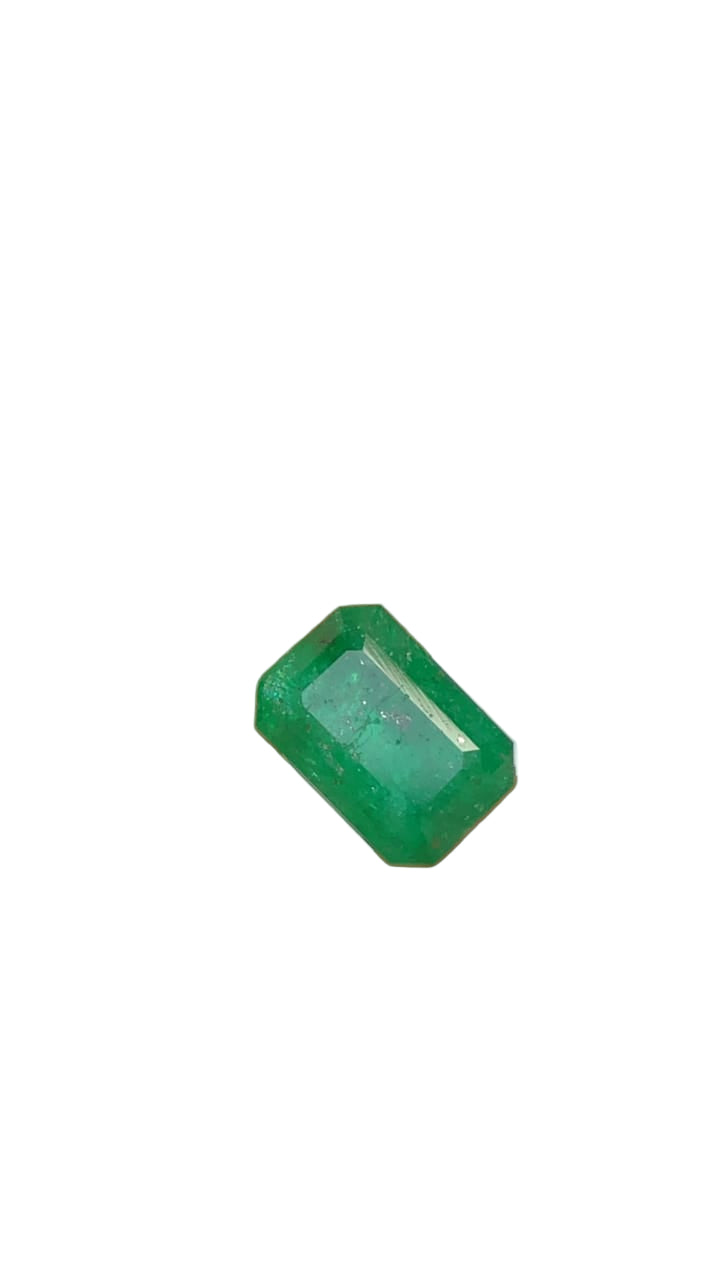
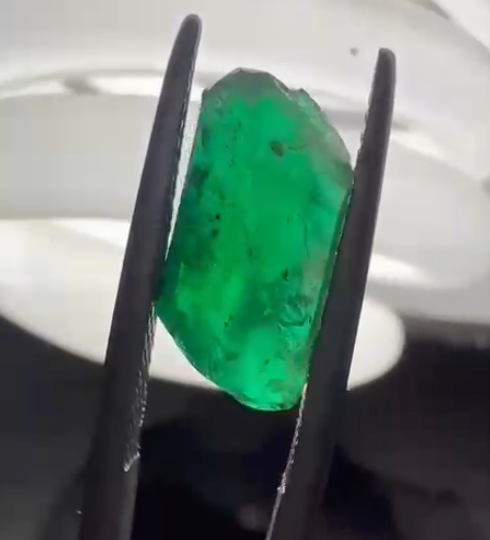
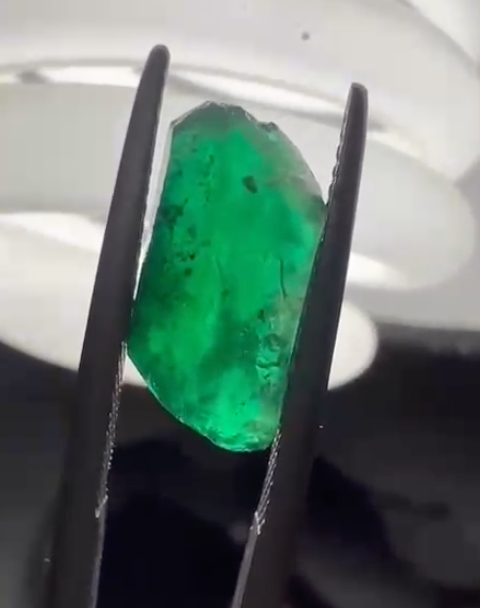
Shop This 11 Carats Natural Zambian Emerald →Do Not Choose an Emerald From a Single Backlit Video
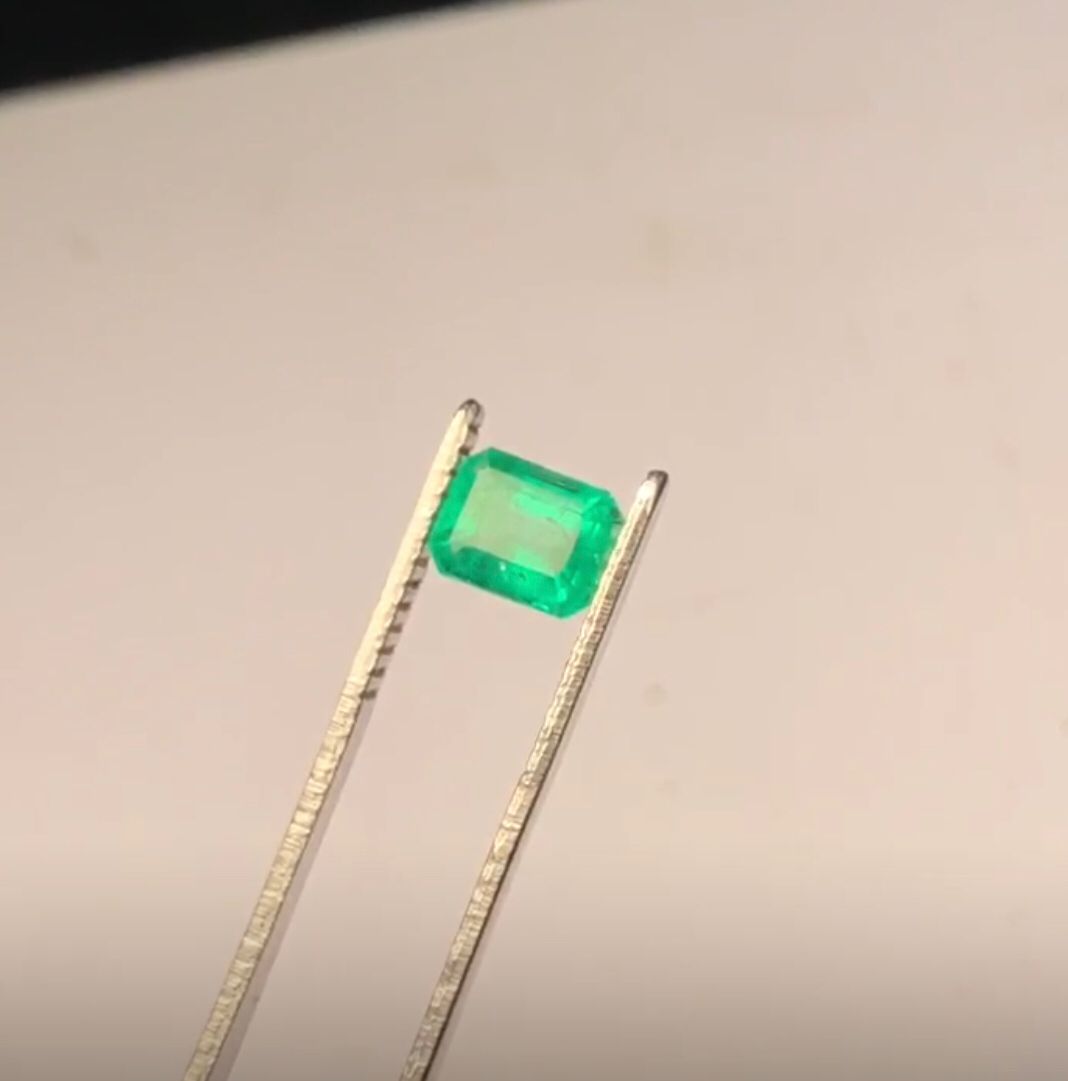
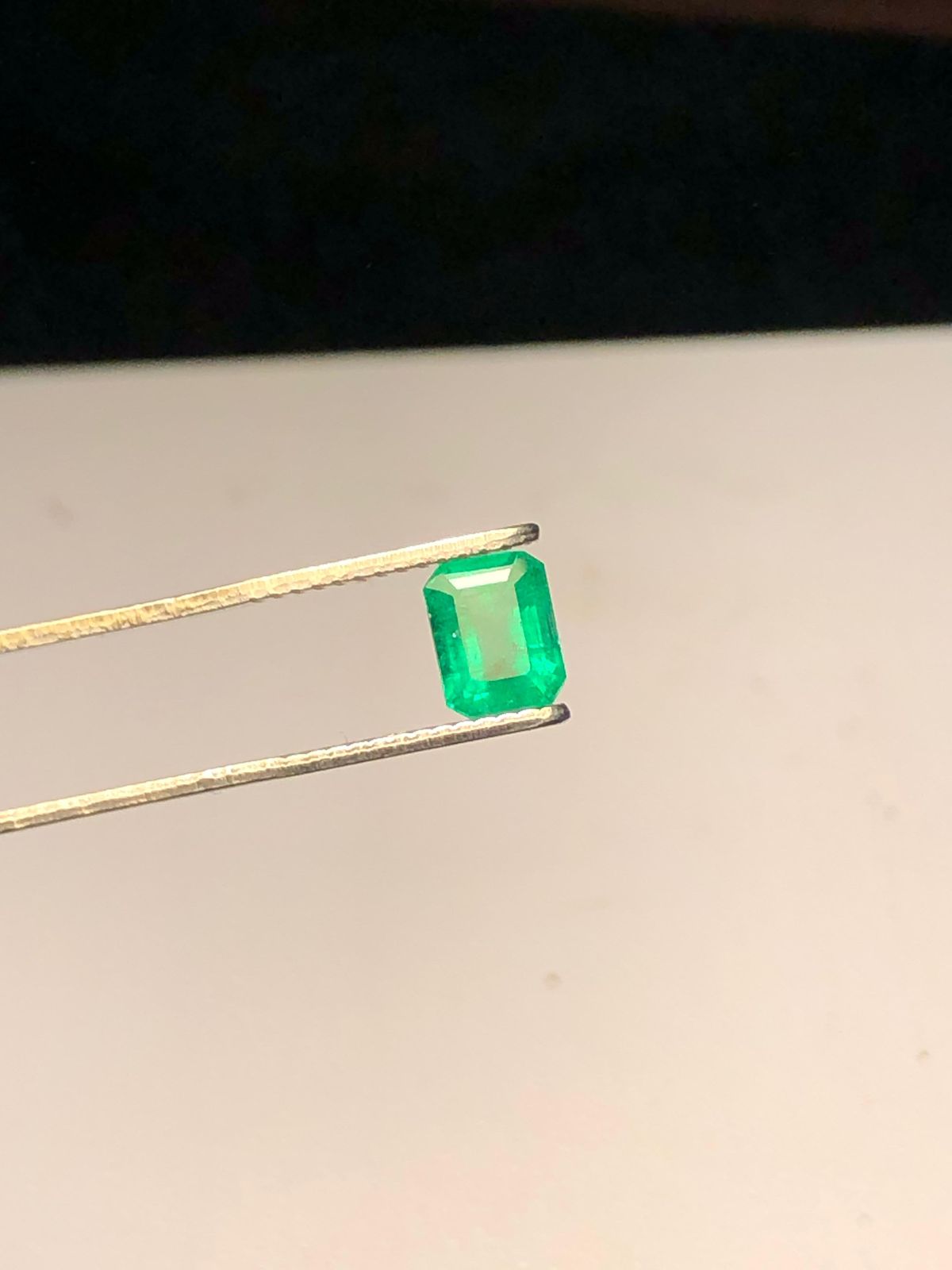
Strong backlighting can make an emerald appear unusually transparent and luminous. It is useful for revealing inclusions, but it does not show how the stone will normally appear in jewelry.
Conversely, very dark backgrounds can intensify green color and hide a window.
A useful online presentation should show several views:
- Face-up in diffused light
- Moving under ordinary room light
- Side view showing depth
- Close view of the girdle and corners
- Backlit view for inclusions
- A scale reference or accurate millimeter measurements
No single image can replace these combined observations.
A Five-Minute Loose-Emerald Check
Before purchasing a natural emerald for jewelry, ask:
Does it remain attractively green in more than one type of lighting?
Does its visible size make sense for its carat weight?
Is there a distracting central window or excessive dark extinction?
Where are the major fissures in relation to the girdle, corners and future prongs?
Is the stone suitable for the intended use: ring, pendant, earrings or collection?
These questions do not replace laboratory identification. They address a different part of the buying decision: whether a genuine natural emerald is also the right physical and visual emerald for the jewelry being planned.
Frequently Asked Questions
Is a windowed emerald fake?
No. Windowing is usually related to cutting proportions and light leakage, not whether the emerald is natural or synthetic.
Does a dark emerald have better color?
Not necessarily. Strong saturation is desirable, but an emerald can become so dark that its green color and transparency are difficult to see in ordinary lighting.
Are visible inclusions bad in a natural emerald?
Visible inclusions are common and expected. Their effect depends on their appearance, position and whether they compromise transparency or structural integrity.
Can an included emerald be placed in an engagement ring?
Yes, many included natural emeralds are worn successfully in rings. The fissure pattern, treatment, girdle condition, setting design and wearer's lifestyle should all be considered.
Why can two emeralds of the same carat weight look different in size?
One may carry more weight in its depth, while another spreads more of its weight across its visible face. Millimeter dimensions are therefore essential when comparing loose stones.
Is the emerald cut always the best shape?
No single shape is best for every stone. The emerald cut can protect corners and display color elegantly, but oval, cushion, pear, round and other shapes may be appropriate depending on the rough, inclusion pattern and intended jewelry design.
The Best Emerald Is Not Always the One With the Best Numbers
A laboratory report can confirm whether a stone is a natural emerald and disclose detectable treatments or geographic origin. Carat weight can describe how much it weighs. Measurements can describe its physical size.
None of these facts alone explains how the emerald will behave when worn.
The most successful purchase is an emerald whose color, proportions, transparency, inclusion pattern and setting work together. That is the fifth C: compatibility.
For buyers of natural loose emeralds, it may be the factor that makes the greatest difference between a stone that looks impressive in a product photograph and one that remains beautiful after it becomes part of a finished piece of jewelry.





0 comments